Fence Calculator
Unit System
Fence Style (Preset)
Presets set default values; all fields can be overridden.
Fence Length
Post Configuration
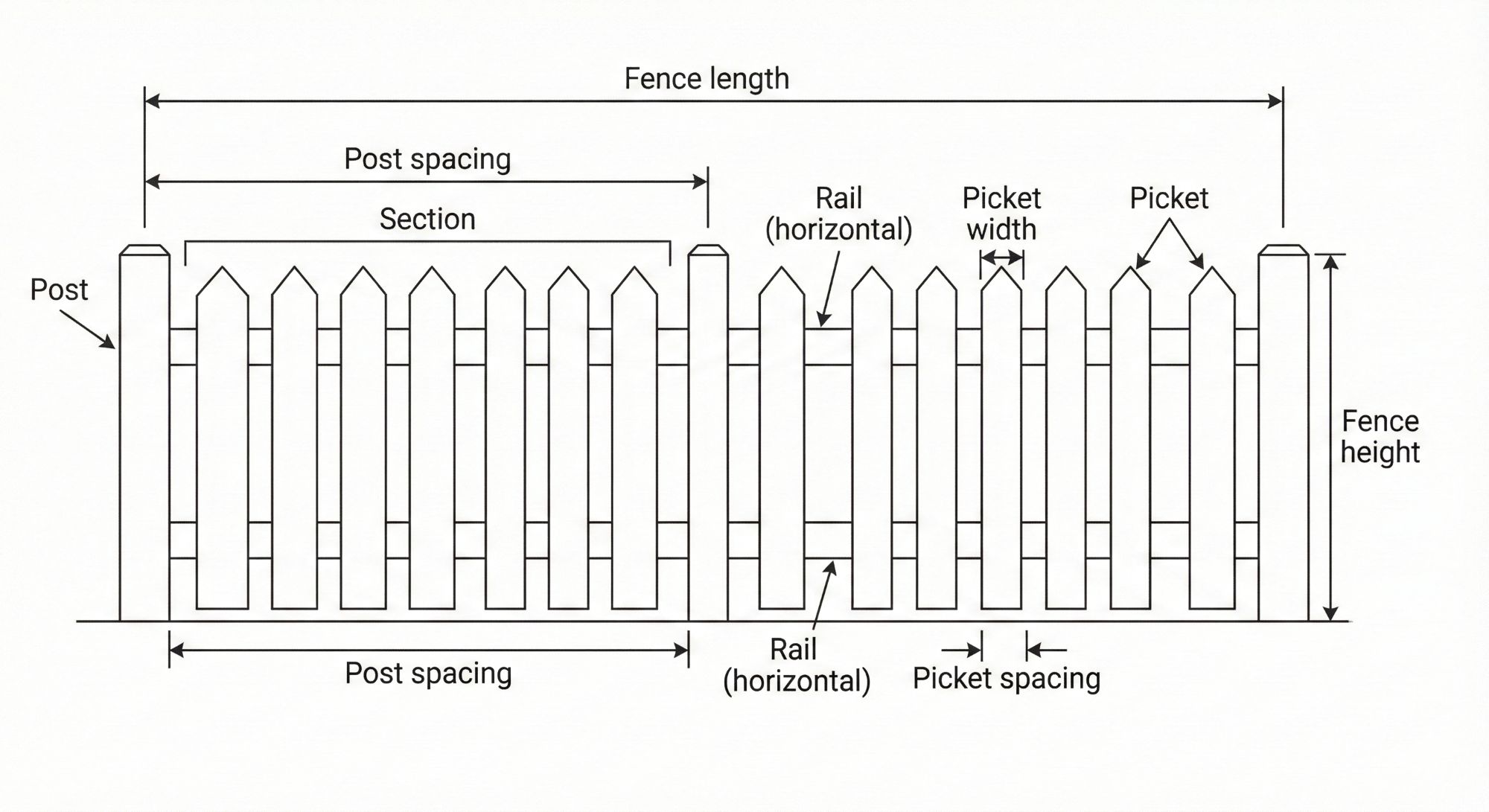
The space between fence posts is typically between 6 and 8 feet; or 2 and 3 meters.
Optional: Additional Posts
Number of corner posts in your fence layout
Number of gates in your fence
Check if you want to include posts at the start and end of the fence
Fence Height
Post Length (Optional)
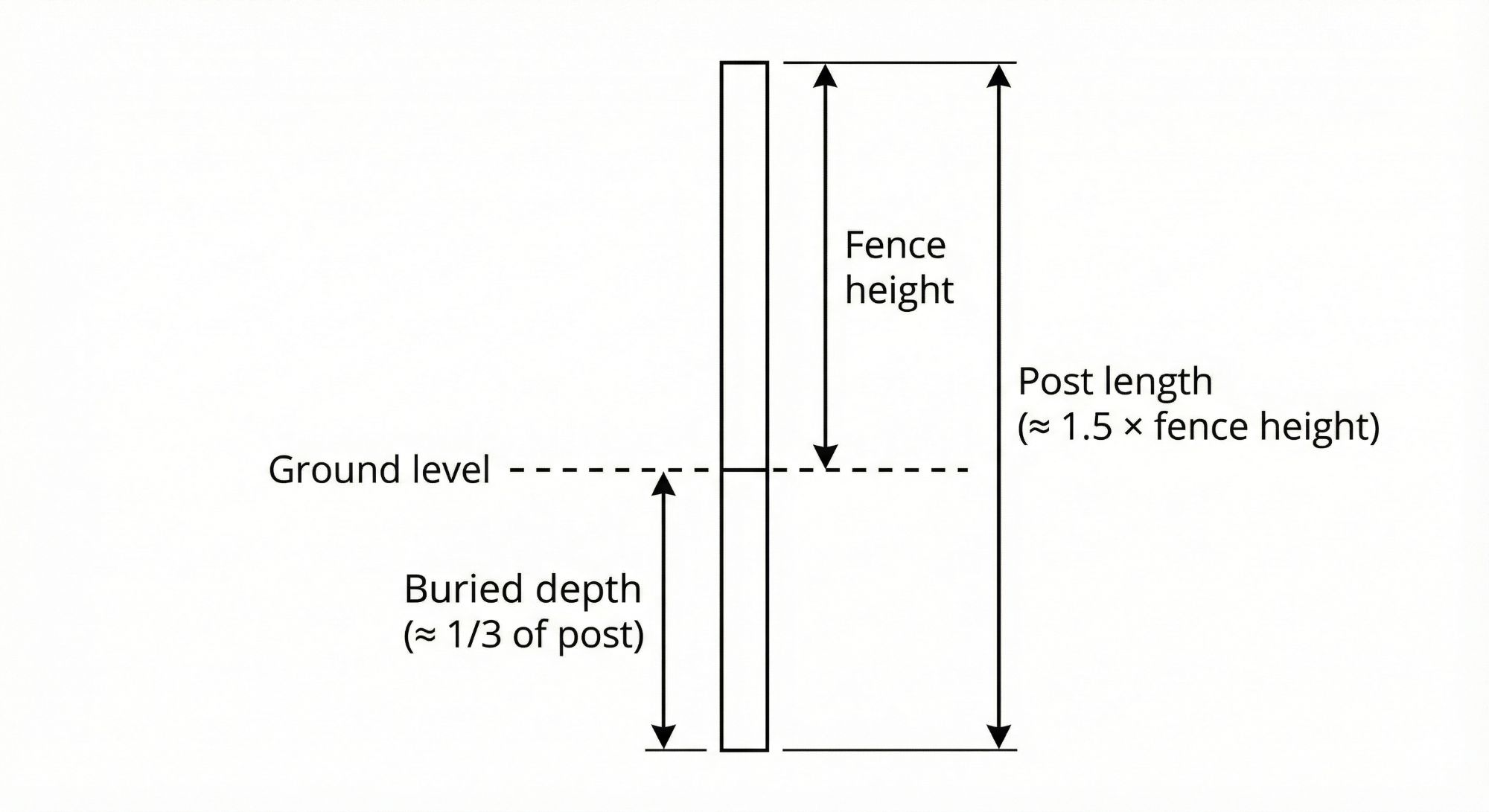
Leave empty to auto-calculate (1.5x fence height). At least 1/3 of the post must be buried in the ground, so posts must be at least 1.5 times the fence height.
Rails (Optional)
The number of horizontal rails per section. Default is 2. Leave as default for most fence styles.
Pickets
Check this box to calculate the number of pickets needed. Enter picket dimensions below.
Concrete for Post Footing
Check this box to calculate the amount of concrete needed for post footings. You'll need to provide post dimensions and hole depth.
You're building a fence. Respect.
Now you need to know how many posts, sections, rails, pickets, and maybe concrete you'll need… without turning this into a weekend-long math tragedy.
Use this free Fence Calculator to estimate materials in seconds. Enter your fence length, post spacing, and fence height to calculate number of posts and sections. Add rails and pickets if you're building a wood fence. Turn on concrete estimation if you want to stop guessing and start pretending you're organized.
No signup. No fluff. Just numbers and a shopping list.
What This Fence Calculator Does
- Calculates the number of fence posts you need based on fence length and spacing
- Calculates the number of sections between posts
- Estimates post length based on fence height (so your posts don't immediately surrender to gravity)
- Calculates rails needed (rails per section × sections)
- Calculates pickets needed (based on picket width + spacing) — great for a wood fence calculator use-case
- Optional: estimates concrete volume for post footings (aka a practical concrete fence calculator)
- Works as a perimeter fence calculator when you enter a total perimeter as "fence length"
Looking for other tools?
- Need area/perimeter for a yard or room? Use: Square Feet Calculator
- Need concrete mix/cost for the volume you got here? Use: Concrete Calculator
- Doing tile next because one project is never enough? Use: Tile Calculator
Fence Types (Presets)
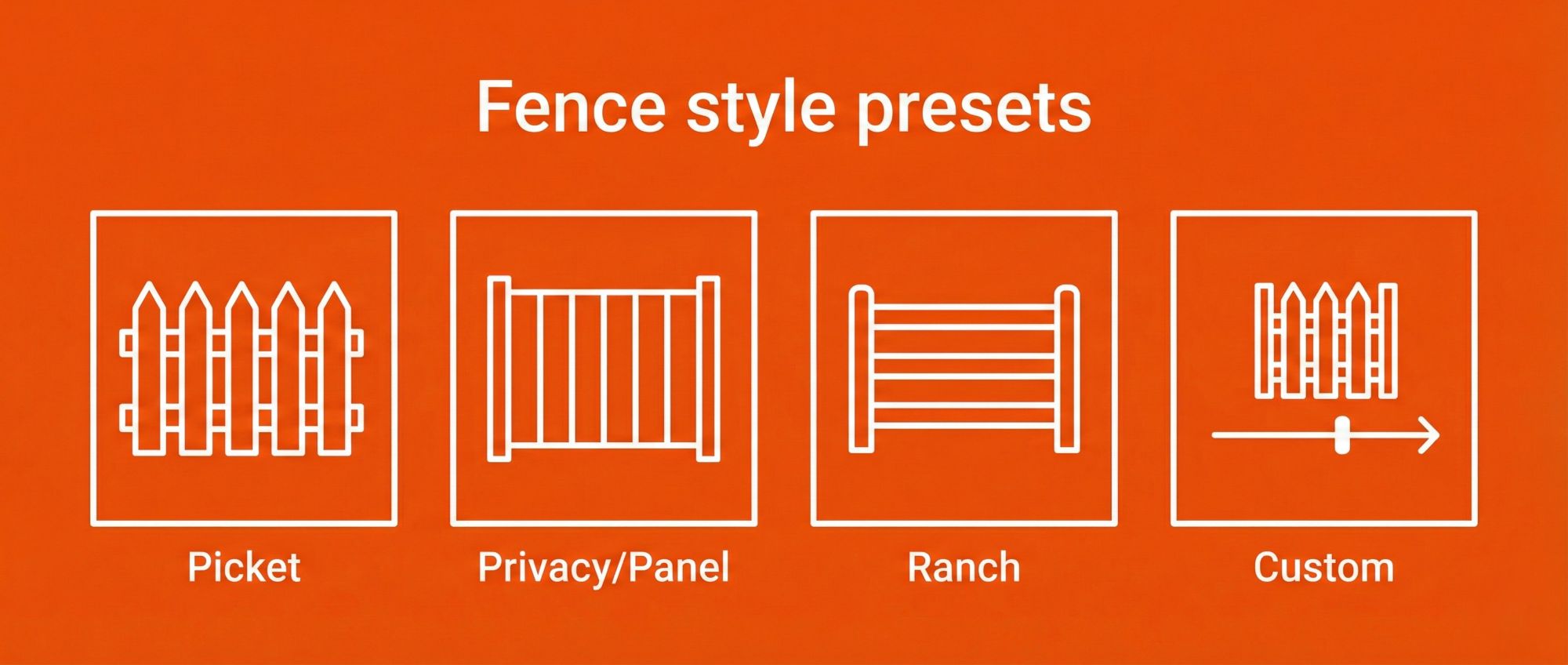
This fence calculator app can be used for different fence styles. If your page has a "Fence type" preset selector, it usually changes defaults like spacing and rails:
- Picket fence: rails + pickets (most common for picket math)
- Privacy / panel fence: rails + panels/boards (pickets not needed)
- Ranch fence: rails only (pickets not needed)
- Custom: you control the settings
If you specifically want a chain link fence calculator or a wire fence calculator, the post-spacing logic still helps, but those styles often need extra hardware (fabric, tensioning, braces). If you have dedicated pages for those, link them here.
How to Calculate Fence Posts and Sections
Posts formula
Posts = ceil(Fence length ÷ Post space + 1)
Sections formula
Sections = Posts − 1
Example:
Fence length: 25 m
Post space: 2.5 m
Posts = ceil(25 / 2.5 + 1) = ceil(10 + 1) = 11 posts
Sections = 11 − 1 = 10 sections
Yes, the calculator rounds up. Because you can't buy 10.2 posts unless you're building a fence for ants.
Post Length (Based on Fence Height)
If at least 1/3 of the post is buried, a simple planning rule is:
Post length ≈ 1.5 × Fence height
Example:
Fence height: 1.2 m
Post length ≈ 1.5 × 1.2 = 1.8 m
This is a planning estimate. Soil, wind, and local rules can change reality. Reality is rude like that.
Number of Rails Needed
Rails depend on style, but a typical choice is 2 rails per section.
Rails = Rails per section × Sections
Example:
Rails per section: 2
Sections: 10
Rails = 2 × 10 = 20 rails
Number of Pickets Needed (Wood Fence Calculator Mode)
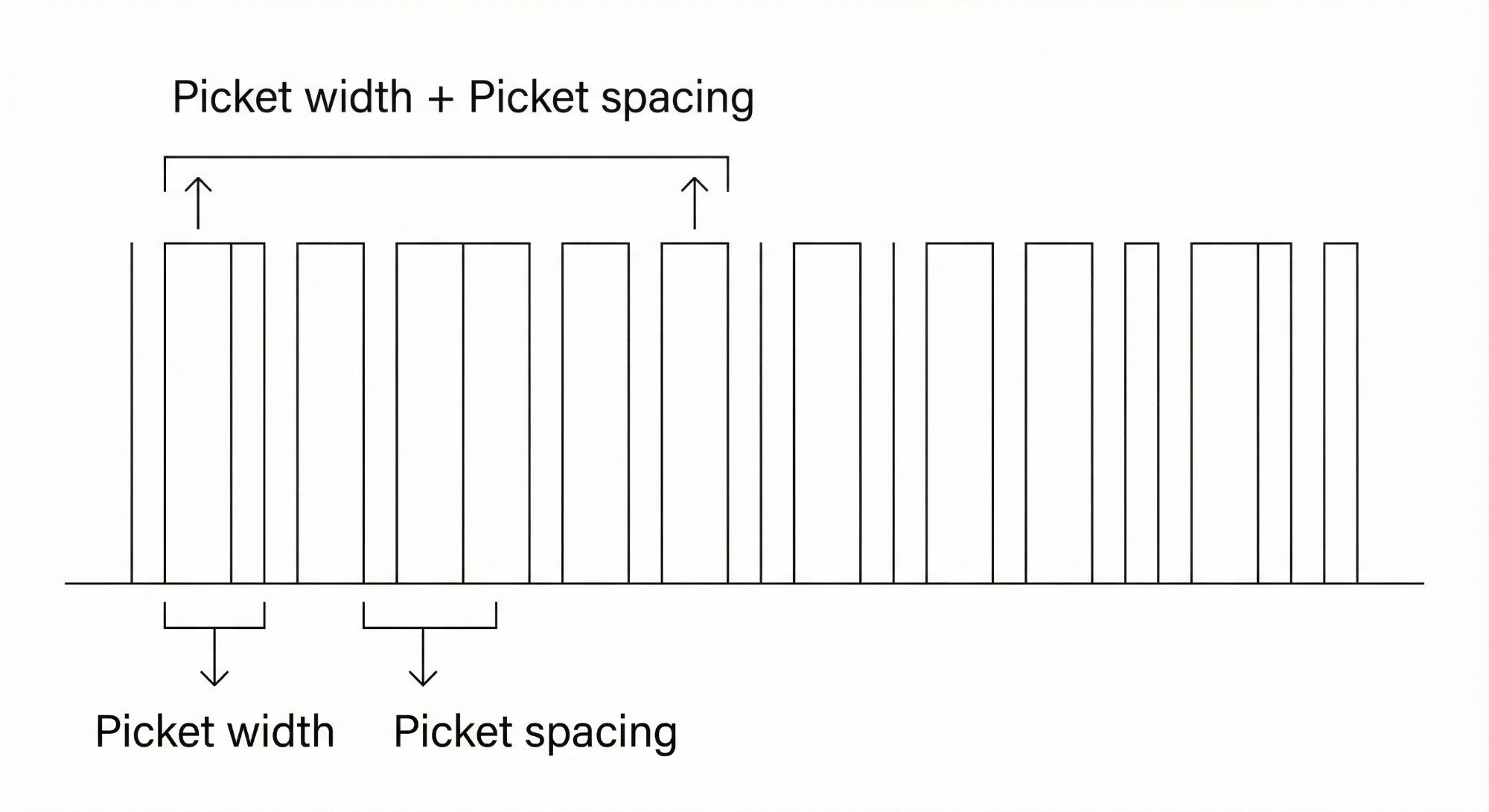
If you're building a picket fence, you'll enter:
- Picket width
- Picket spacing (gap)
Pickets = ceil(Fence length ÷ (Picket width + Picket spacing))
Example (using cm):
Fence length: 25 m = 2500 cm
Picket width: 9 cm
Picket spacing: 1.5 cm
Pickets = ceil(2500 / (9 + 1.5)) = ceil(2500 / 10.5) = 239 pickets
Your fence will look great. Your wrists will not.
Concrete for Post Footings (Optional)
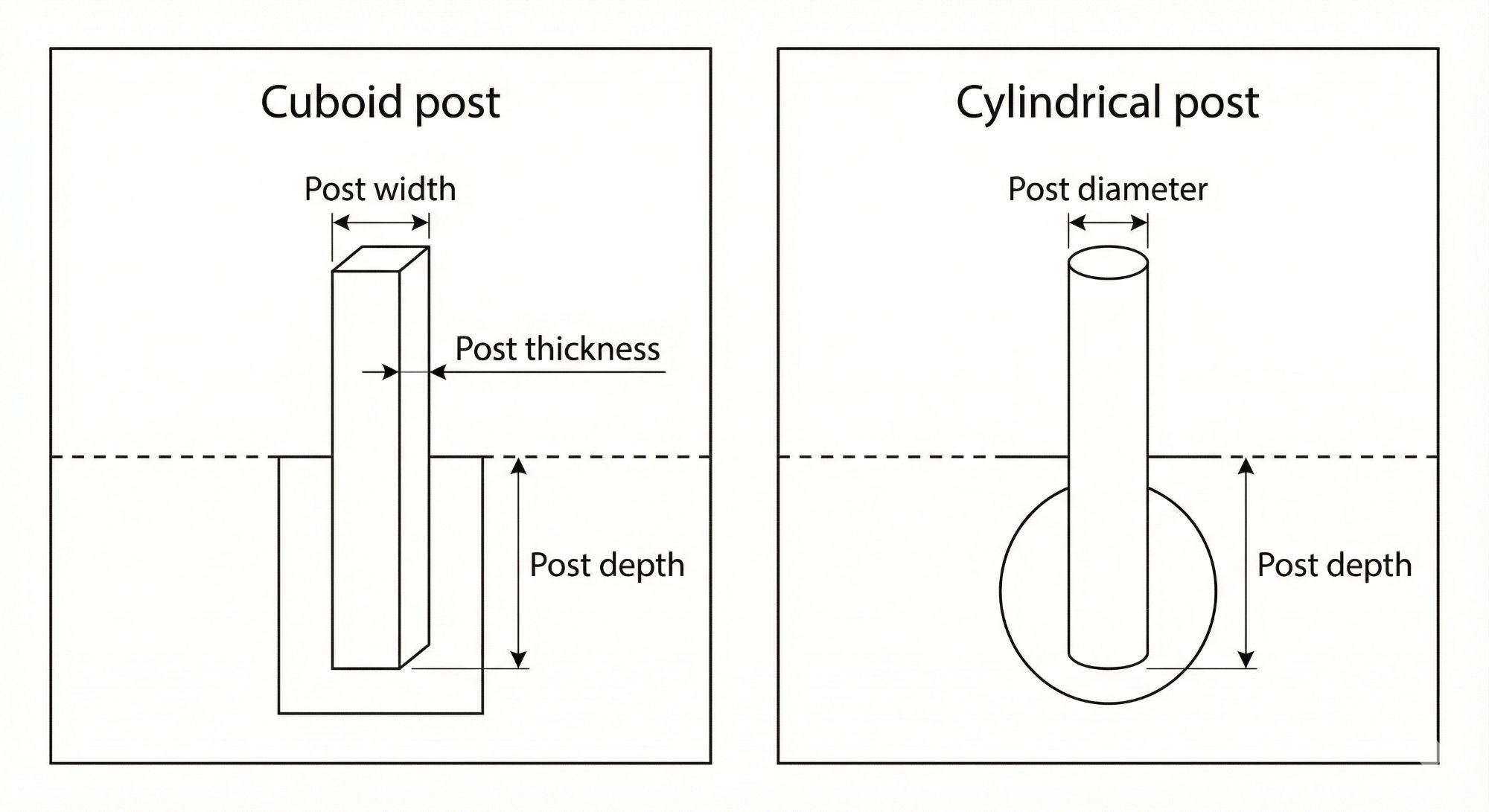
Turn on the concrete section if you want a concrete estimate. You'll choose a post shape:
- Cuboid post (width + thickness)
- Cylindrical post (diameter)
The calculator estimates concrete volume for footings and outputs total volume (typically in m³ or the equivalent).
Then you can plug that volume into Concrete Calculator to estimate mix/cost.
If you searched "concrete fence calculator", this is the part you actually wanted.
Frequently Asked Questions
How do I calculate how many fence posts I need?
Divide fence length by post spacing, add 1, and round up. This fence calculator does it instantly.
What is a perimeter fence calculator?
A perimeter fence calculator is used when you're fencing around an area (yard/property). Calculate perimeter, enter it as fence length, subtract gate widths if needed, then calculate posts and sections.
Can I use this as a wood fence calculator?
Yes. If you use rails and pickets, the tool estimates rails per section and total pickets based on width and spacing.
Can I use this as a chain link fence calculator?
It can estimate posts and spacing, but chain link often needs additional hardware (fabric, tension bands, braces). If you have a dedicated chain link tool, use that for a full build list.
What about a wire fence calculator?
Similar story: spacing and posts are covered, but wire fences may require tensioning, bracing, and specific hardware depending on your setup.
Why are results rounded up?
Because you can't buy 0.3 of a post. Also because the universe hates underestimating.
Mini Roast Disclaimer
We roast the numbers, not you.
But if you set "Post space: 10 meters" for a backyard fence… we're roasting your fence's future.
Manual & Documentation
Fence results are calculated using standard spacing and material formulas based on the values you enter. Concrete estimates are approximations for planning purposes. Educational & entertainment use only — not engineering advice.